How Spotify is scaling its books business
And what it means for publishers and authors | Spotify Investor Day 2026
To mark its 20th anniversary, and in front of an assembled financial audience, Spotify held its third Investor Day in New York. The message from Alex Norström and Gustav Söderström, appearing for the first time as co-CEOs: the service is evolving from curation and recommendation toward an "era of generation" — driven by a proprietary "Large Taste Model" and, by the company's own account, 3.4 trillion daily "taste signals." For the publishing industry, one thread above all is relevant here: the growing books business.
Published: 22.5.2026 | Foto / Video: Spotify
Since launching audiobooks in 2022 (integrating them into its paid plans), Spotify says it has expanded its catalog to more than 700,000 titles and is now active in 22 markets. Further trends:
Growth is accelerating: listening hours rose 60 percent from 2024 to 2025.
New listeners: nearly half of all audiobook listeners only began listening within the past year.
Demographics: almost half of audiobook listeners are under 35 — markedly younger than the overall market. Spotify positions itself explicitly as a door-opener to one of the demographics hardest for publishers to reach: young men.
The segment is gaining economic momentum, as Owen Smith, VP & Head of Audiobooks at Spotify (picture), explained. The add-on subscription Audiobooks+ (15 extra hours of listening time each month) has, by the company's account, around one million subscribers and is on track to reach the 100-million-dollar mark in annualized recurring revenue in July. Especially telling for the value of this audience: according to Spotify, Audiobooks+ users deliver a lifetime value that represents a significant multiple of regular Premium-only subscribers.
Outlook: Higher-hourly add-on tiers for power readers are coming this summer, and later in the year Family and Student plans for Audiobooks+ will follow, extending the offering to entire households — including young readers.
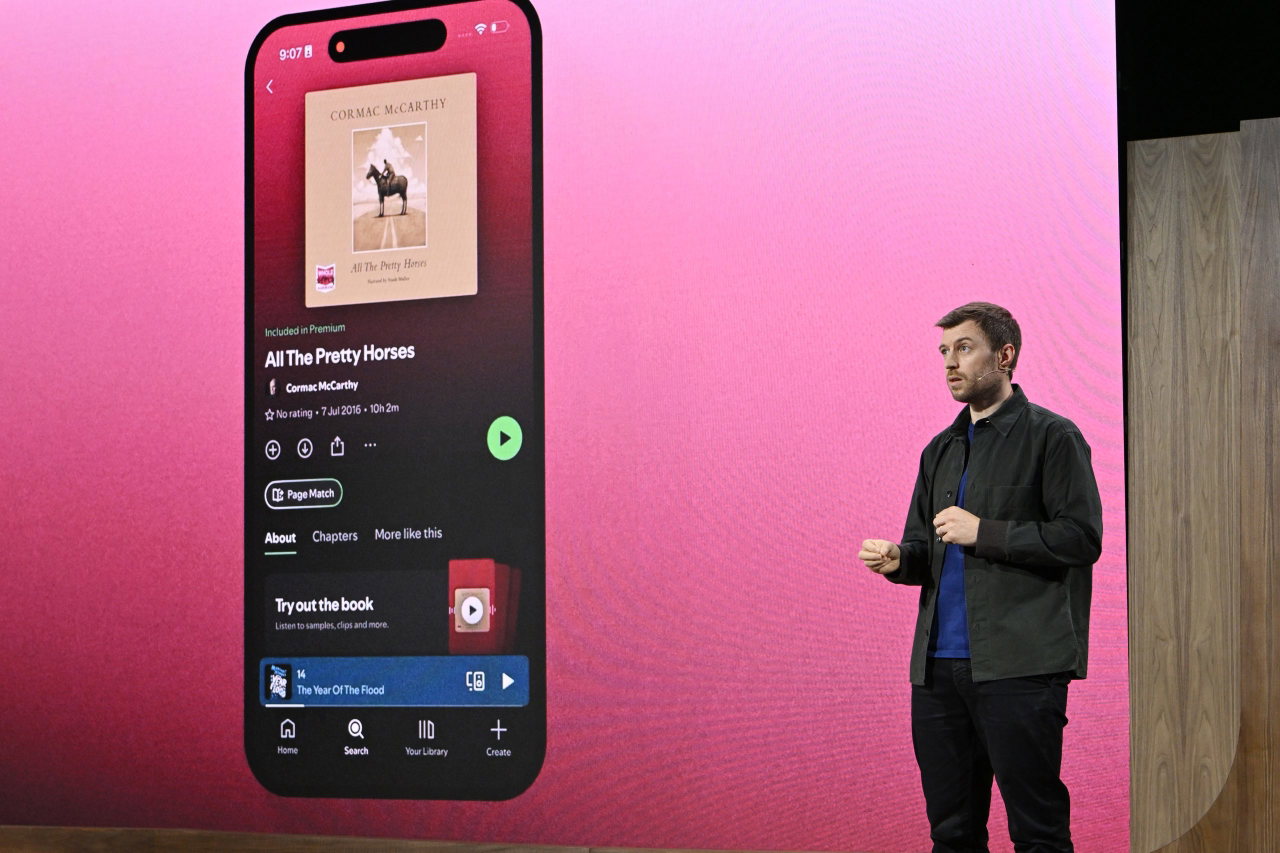
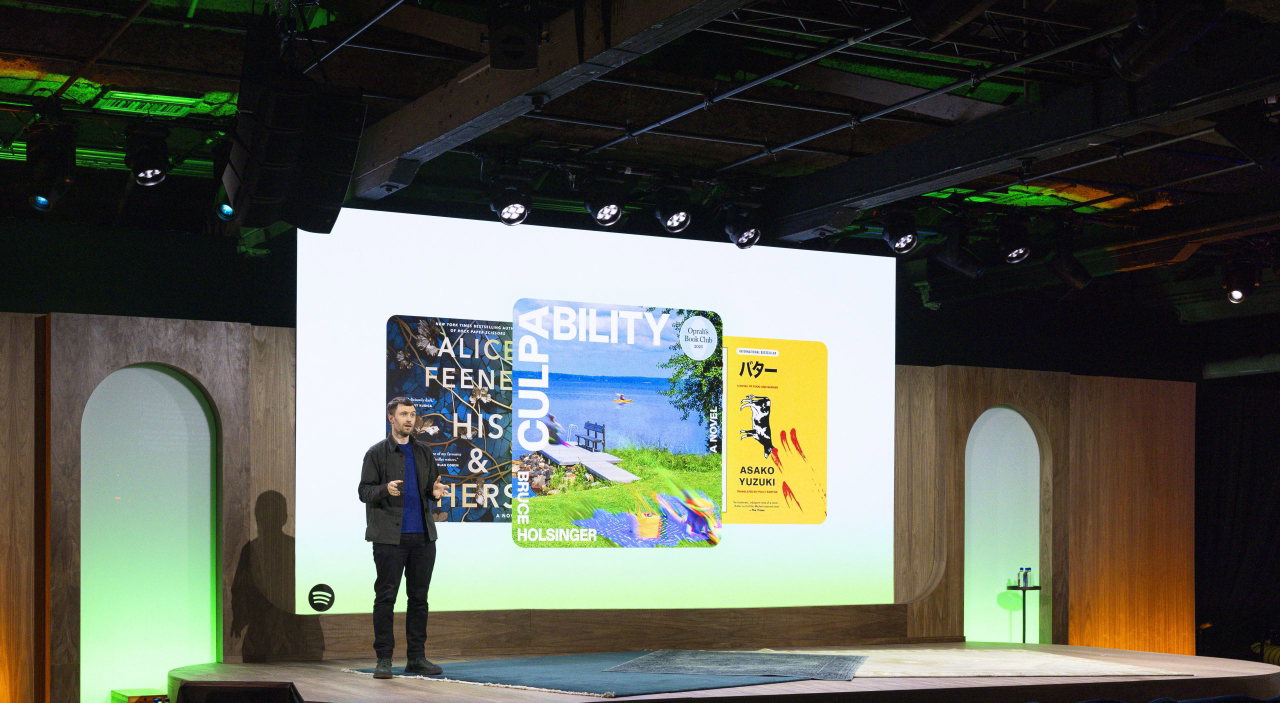
Owen Smith, VP, Global Head of Audiobooks, described a rapid expansion in books.
Discovery: from genre browsing to natural-language discovery
The lever with perhaps the greatest consequences for publishers concerns discoverability. In the future, Premium listeners are meant to discover books not only through title search or genre browsing, but by describing in natural language what they are looking for. Spotify then aims to surface recommendations not solely by category, but across the entire structure of a title: tone, setting, emotional arc, and the kind of reader a book appeals to.
Also this summer, Prompted Playlist — so far available in beta for music and podcasts — will be extended to audiobooks. Users will be able to ask Spotify to assemble a reading list around a mood, a theme, or an interest. For publishers, this means discovery shifts away from rigid metadata categories toward a context- and situation-driven recommendation — a development likely to change the requirements for how titles are described and indexed.
This is accompanied by Page Match, which enables switching between a print book or e-book and its corresponding audio edition. According to Spotify, it is one of its most successful launches ever: listening time is said to rise by up to 55 percent within a month when readers use Page Match, with users finishing books twice as fast — which in turn means more titles are heard and revenue for authors and publishers increases. Also of demographic note: Page Match users are on average six years younger than regular audiobook listeners. Through a partnership with Bookshop.org, users can also buy print books directly within the app.
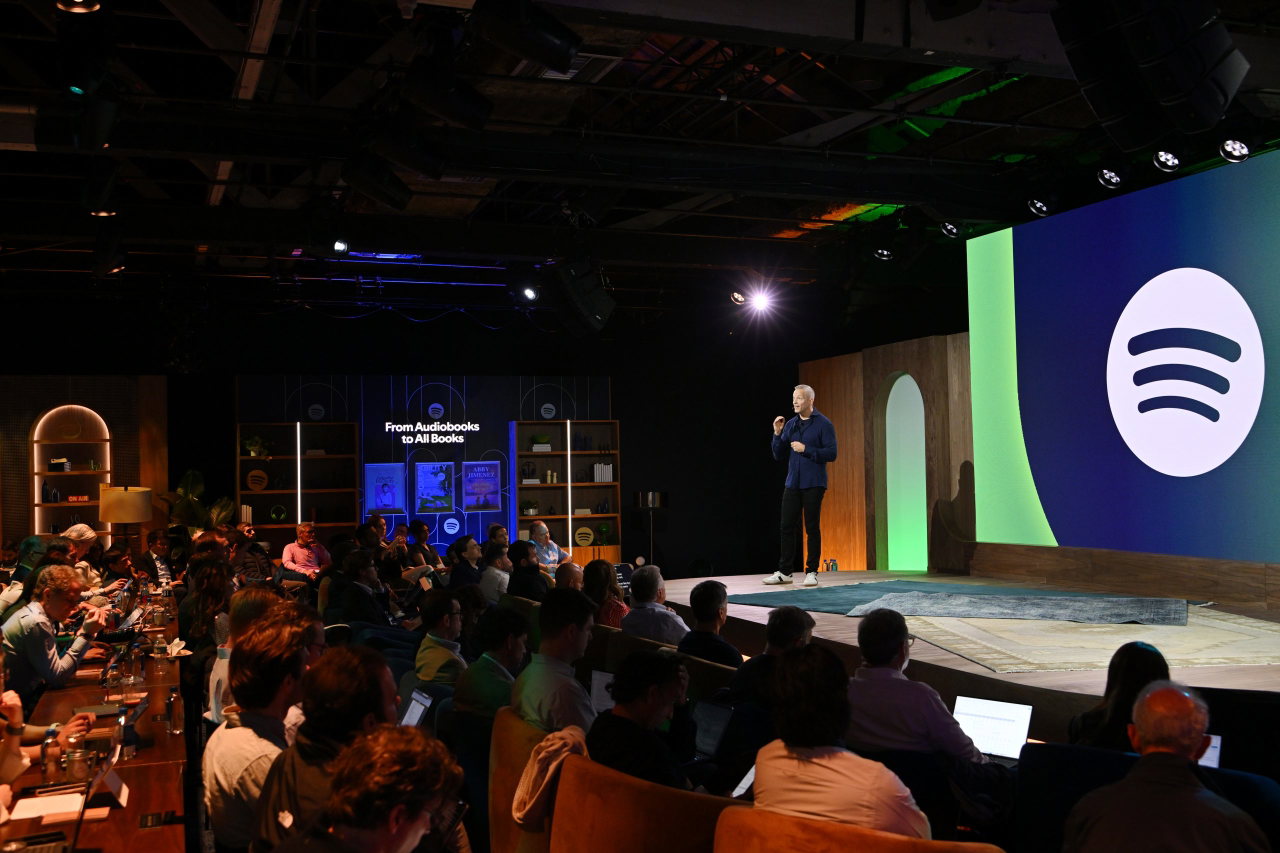
Co-CEO Gustav Söderström
For authors: AI narration without exclusivity
On the production side, Spotify announced Audiobook Creation Tools, launching in beta in early June and initially invite-only. They are intended to let self-published authors generate an audio version of their manuscript directly within Spotify for Authors — based on ElevenLabs' digital voice technology. The AI production can be reviewed before publication, with pronunciation, for example, adjustable. Crucial for self-publishers: the tool requires no exclusive contracts. At launch, the tool is limited to the English language and select markets.
This pushes AI voice generation further into the mainstream of audiobook production — a topic that publishers and narrators' associations alike are likely to watch closely.
"Nearly six in 10 Spotify users have now tried an audiobook"
A conversation of Nathan Hull with Spotify’s Duncan Bruce in the lead-up to Audio @BolognaBookPlus

What matters for the German market
For German-language publishers and authors, one announcement above all is concrete: Spotify for Authors is now also available in German. The author platform — including website, blog, and product interface — is being translated into ten new languages, among them, alongside German, also French, Dutch, Latin American Spanish, the Nordic languages, and Canadian French. Authors can switch the language in their account settings starting today.
With this, Spotify is for the first time systematically addressing writers outside the English-speaking world — with localized audience insights and publishing tools. Unlike with certain US-focused features, the German-speaking region is no new territory for Spotify in the books business: the Premium audiobook experience has been on the market here for around a year, and the Family and Student options for Audiobooks+ are already detailed on the German support pages. For the highest-growth innovations — the expanded Audiobooks+ tiers and the natural-language discovery features — Spotify names no firm launch date for the DACH region, but speaks of a rollout in "select markets." Given its established presence, the German-speaking region is likely to continue playing a role here.
In the words of Owen Smith, VP & Head of Audiobooks: the industry has long waited for a platform that connects formats, removes barriers, and opens up new audiences. With the new chapter of Books on Spotify, the company wants to broaden access for all kinds of readers — from casual readers to those who devour a book a week — and open up new ways for authors to reach their audiences across different formats.
Personal Podcasts: Spotify wants to make it easier to generate short, private, personalized audio formats directly within Spotify.
The user now can ask real-time questions about what you are hearing.
Beyond books: further announcements
Beyond the books business too, Spotify presented a dense bundle of innovations in New York. Especially relevant for the publishing industry is the podcast area — as an audio format, it sits immediately adjacent to the audiobook and has long been a content pillar in its own right for some publishers.
Podcasts: the second profitable engine. According to Roman Wasenmüller, Global Head of Podcasts, the podcast business is now in the black for the second consecutive year — with accelerating growth. Spotify operates on three levels at once: as a consumer platform that deepens engagement, as a publisher that scales the advertising business, and as a toolkit that helps creators monetize and grow. The company announced Memberships — a toolset that will let eligible creators offer subscriptions directly to their most dedicated fans on Spotify. For publishers running their own podcast formats, this is another direct revenue channel alongside advertising.
On the product side, Maya Prohovnik, VP of Podcast Product, showed features intended to make podcasts more discoverable and more usable: transcripts, automatic chapter markers, and the ability to ask real-time questions about what you are hearing. Notable with regard to AI-generated audio formats is the Personal Podcasts initiative: after seeing strong demand from users creating custom audio with their own AI agents and saving it to Spotify, the company now wants to make it easier to generate short, private, personalized audio formats directly within Spotify.
This is flanked by Studio by Spotify Labs, a standalone desktop app that generates such personalized audio experiences — for example, daily briefings — and saves them directly to the Spotify library. It is set to be available soon as a Research Preview for Premium users in more than 20 markets. This development deserves attention from an industry standpoint, because it brings AI-generated spoken content closer to the mass market — a trend that could shape the audiobook segment just as much as the podcast segment over time.
Studio by Spotify Labs is a standalone desktop app that generates personalized audio experiences.
The remaining areas at a glance:
Music and AI rights: With Universal Music Group and Universal Music Publishing Group, Spotify signed licensing agreements meant to enable a tool for creating covers and remixes from participating artists' and songwriters' catalogs — with consent, credit, and compensation built in from the start. A model that could also serve as a blueprint for handling generative AI with book and spoken-word content. In total, the service paid out more than 11 billion US dollars to the music industry in 2025 alone.
Ticketing: With "Reserved by Spotify," the most engaged fans are to receive early access to concert tickets via launch partner Live Nation — an attempt to enhance the subscription through exclusive added value.
Advertising: Spotify has fundamentally rebuilt its advertising business around a unified system that serves ads across music, podcasts, and video to the 483 million users on its free tier. The number of active advertisers rose 68 percent year over year in the first quarter.
Financials: By its own account, Spotify counts 761 million active users and nearly 300 million subscribers across 184 markets. By 2030, CFO Christian Luiga is targeting a mid-teens revenue CAGR, a gross margin of 35 to 40 percent, and an operating margin above 20 percent.
What is clear: Spotify no longer regards books as a sideline, but as a growth engine in their own right — with a younger audience, new production tools, and a discovery logic that is moving away from the classic world of publishing metadata. For the industry, it is worth watching closely which of these building blocks will arrive in Germany, and when.