“Audio isn’t the thing you fall back on when reading is too hard”
Yoto founder Ben Drury on dismantling the barriers to childhood imagination and why the industry must move beyond the “recorded print book.”
Published: 21.4.2026 | Foto / Video: Yoto
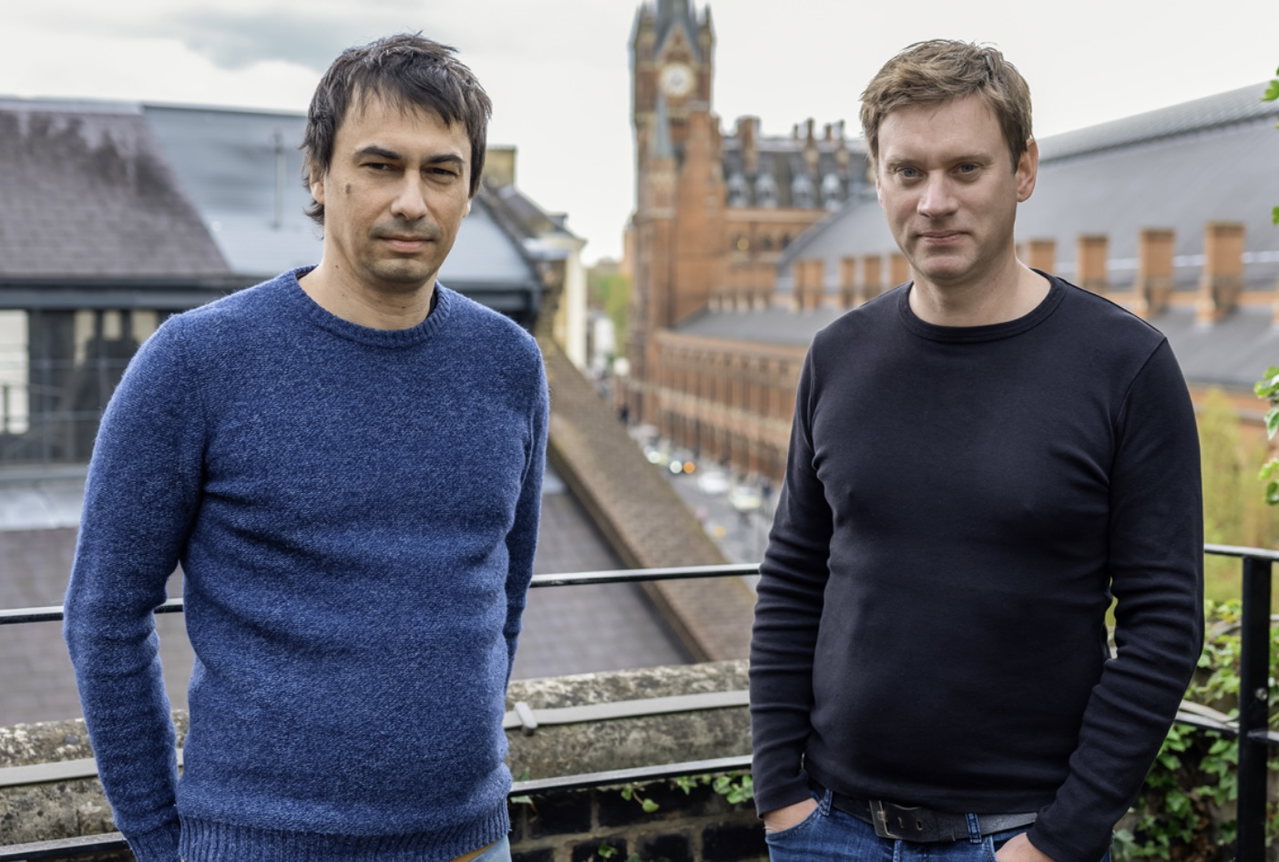
Yoto Founders: Ben Drury (r.) and Filip Denker (l.)
The genesis of Yoto wasn’t found in a boardroom, but in the evening living rooms of two fathers tired of the digital tug-of-war. What Ben Drury describes as a “hobby that had got slightly out of hand” has since evolved into a fundamental shift in children’s media – a screen-free ecosystem that prioritises sensory engagement over pixelated distraction.
While the tech world often chases the loudest “new” thing, Drury’s success stems from a return to the foundational: the power of the spoken word. By decoupling stories from the mechanics of the printed page, Yoto has tapped into a “quiet relief” shared by parents globally, offering children a sense of independence that is both tactile and transformative.
In this candid exchange, Drury discusses the “signal” that turned a prototype into a scalable business, the cognitive confidence built through listening and his challenge to publishers to stop treating audio as a secondary medium and start exploring its interactive potential.
"Filip and I were just two dads who were frustrated, building something in the evenings“
Yoto was founded to meet a very personal need as parents: you wanted to give your children screen-free access to audio. Looking back on the company’s founding, what was the moment when a parental project became a scalable business?
For a long time there was no grand plan. Filip and I were just two dads who were frustrated, building something in the evenings because we wanted it to exist for our own children. We were prototyping, experimenting, getting things badly wrong and trying again. It genuinely didn’t feel like a startup, it felt like a hobby that had got slightly out of hand. The moment that changed everything was when we put an early prototype in front of families we didn’t know. Not friends who’d be polite about it: strangers. And the children just understood it immediately. They picked it up, they were independent, they were absorbed. And the parents were watching with this look of quiet relief that we recognised completely because we felt it ourselves. That was the signal. You stop building for yourself and start building for everyone.
Many children and young people today find reading a chore. How can audio re-establish access to stories, knowledge and imagination?
We’ve always been careful not to position what we do as a consolation prize for children who struggle with books. Audio isn’t the thing you fall back on when reading is too hard; it’s a genuinely powerful way to experience stories and ideas in its own right. What we see time and again is that listening builds confidence. A child who’d never finish a chapter book will sit happily through three hours of an audiobook, and somewhere in that process they’ve absorbed vocabulary, narrative structure, emotional complexity – essentially all the things that make reading rewarding. The barrier to the joy of stories isn’t always the story itself; sometimes it’s just the mechanics of reading. Audio removes that barrier entirely. And very often the child who discovers a world through listening is the child who eventually goes looking for the book.
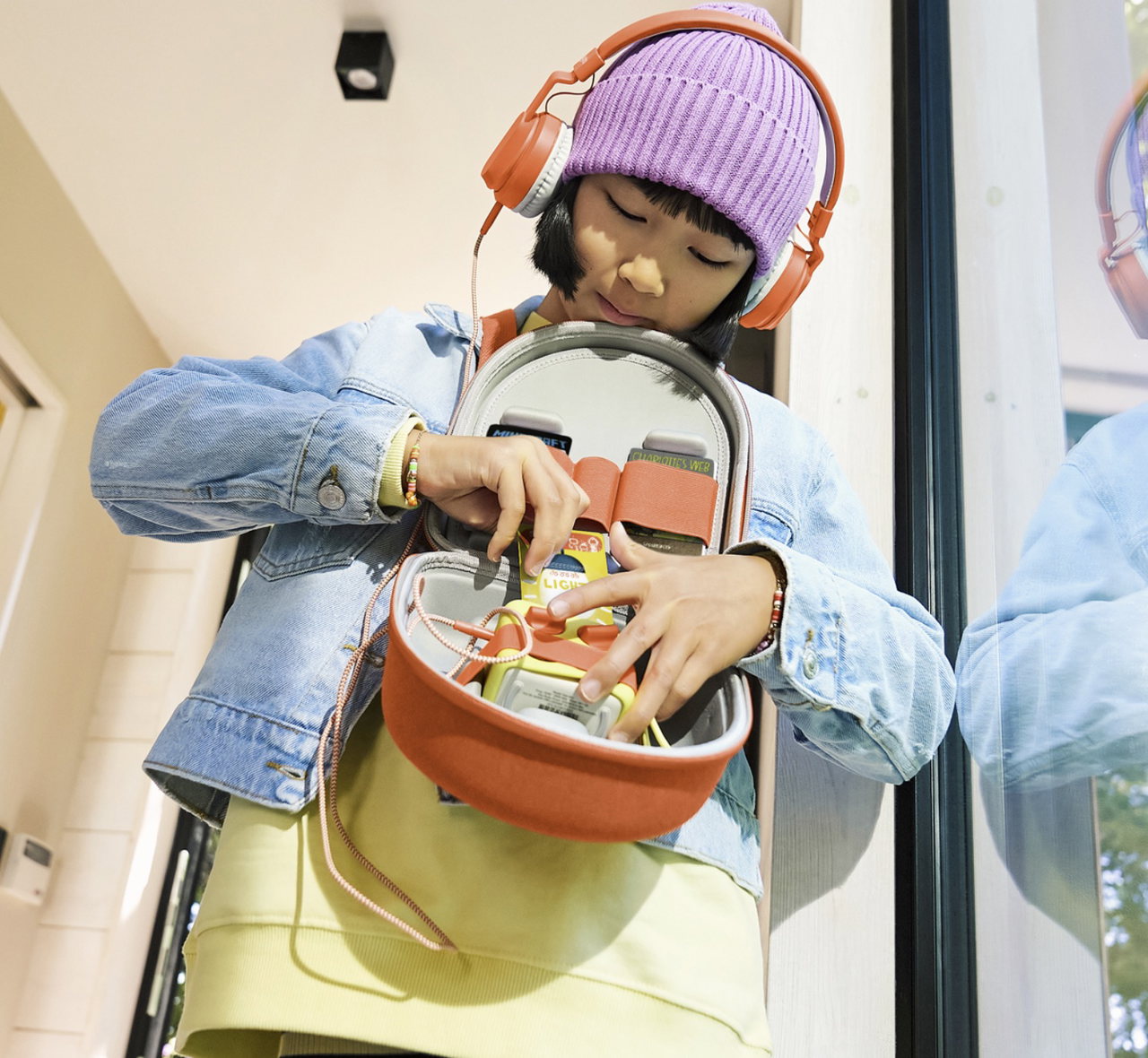
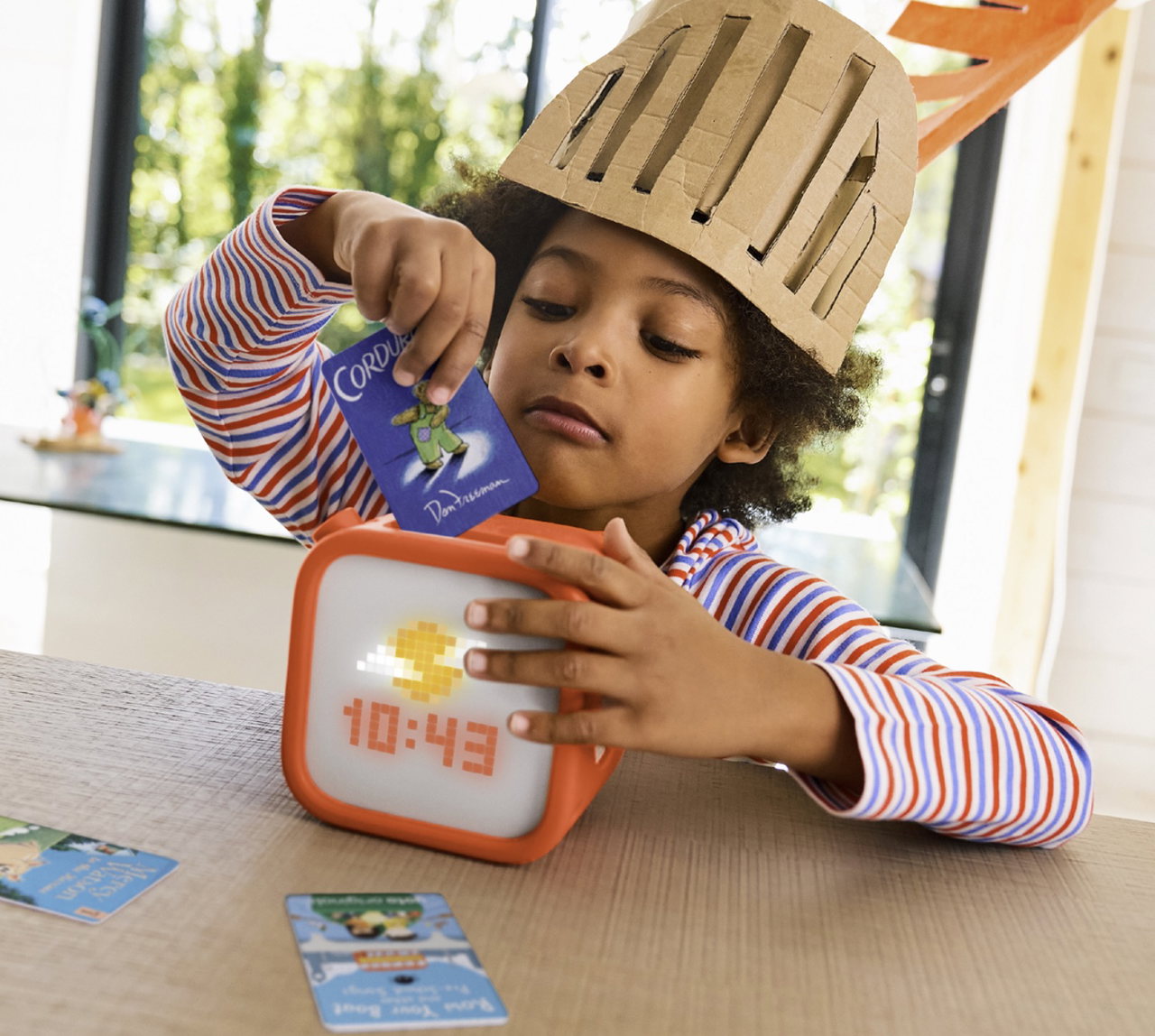
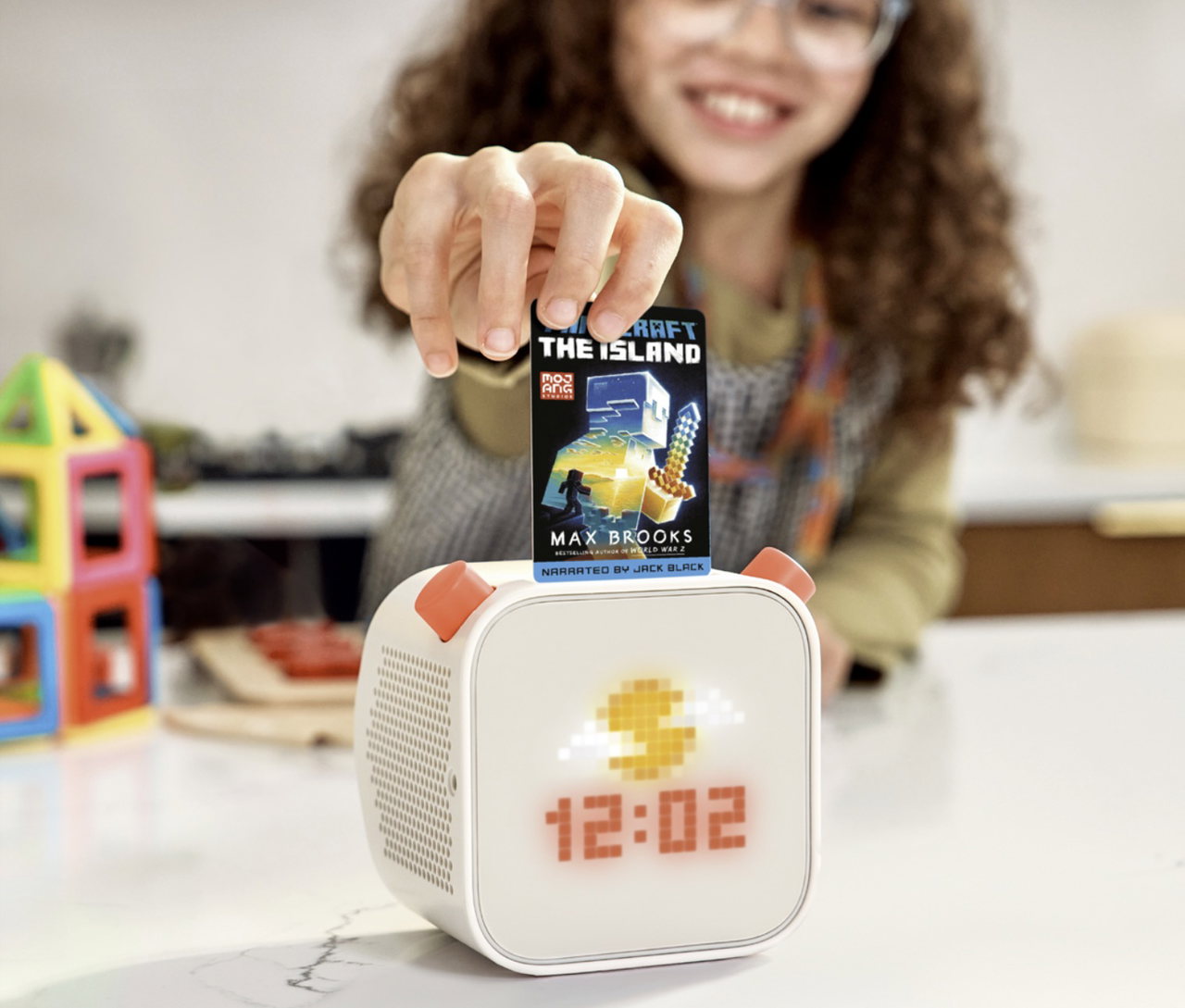
"The industry just needs to catch up with its own ambition"
How can publishers contribute to this more effectively than they have done so far?
The publishers who excite us most are the ones who come to us asking what’s possible rather than what’s standard. The default assumption in the industry has been that an audiobook is essentially a recorded print book; same content, different delivery. And that’s fine, it has value. But children’s audio has so much more potential than that. We’ve worked on Yoto cards that have an interactive element, solving a mystery or letting the story unfold differently depending on choices the child makes. The technology is there, the authors are ready for it. The children are absolutely ready for it. The industry just needs to catch up with its own ambition.
You say that Yoto is not a hardware company, but an audio ecosystem. What does that mean strategically for product, content and margins?
I spent years in digital content before Yoto, and one thing that experience teaches you is that the device is never the destination, it’s the door. The player gets a child into the Yoto world, but the relationship we build with a family over years is built through the content, the cards, the app, the partnerships, the original programming we make ourselves. That’s where the depth of value sits and structurally it’s also where the better margins are. Hardware is capital-intensive, it’s slow, it’s logistically complex. We love making great hardware and we’re proud of what we’ve built, but the strategic priority has always been the ecosystem around it. A family that buys one player might be with us for six or seven years of their child’s life. The hardware opens that relationship; everything else sustains and deepens it.
Why does Yoto now offer music as well as audiobooks – is that due to your origins in the music industry, or how do David Bowie and Queen actually fit with your main target audience?
My background is in music, and Filip’s too, so of course that’s part of it. We’ve always believed that audio in its fullest sense includes music and some of the first content we played with when inventing Yoto was music. But the honest answer is we follow what families actually want, and what we’ve discovered is that catalogue music has this remarkable cross-generational pull. Parents have deep emotional connections to certain albums and artists, and they genuinely want to share that with their children. It becomes a ritual around the player, something the whole family listens to together. And kids respond to the energy and the drama of that music in a way that’s completely instinctive. When you see the range of what actually gets played (Harry Potter one minute, ABBA the next) you realise Yoto isn’t really a children’s product in a narrow sense. It’s a family product and music is a huge part of why that’s true.
Yoto has been growing very strongly for years, most recently by over 80 %. You often speak of ‘sustainable growth’. How do you define this growth model in concrete terms today, given that the company is scaling up so rapidly?
Sustainable growth means growing in a way that keeps all your options open. The temptation when you’re scaling fast is to chase the headline number at the expense of the fundamentals; to take on too much equity, stretch the balance sheet, enter markets before you’re properly ready. We’ve consciously resisted that. Being profitable at the EBITDA level for three consecutive years while growing at this rate isn’t an accident; it’s the result of being disciplined about how we use capital, particularly around inventory management given how seasonal our business is. The reason that matters is freedom. A profitable, well-capitalised company gets more choices: which market to enter next, which content deal is worth doing, whether to build or partner. That freedom is what sustainable growth actually buys you.
"The gap between where Yoto ships and where Yoto truly operates is enormous"
What were the key growth drivers?
Content has been the biggest engine. Every major new title or partnership like Harry Potter, KPop Demon Hunters, Disney and Pixar or the big music catalogues brings in families who weren’t ready to buy before and gives existing Yoto families another reason to expand their card collection. The library going from a few hundred titles to well over a thousand has been transformative. Beyond content, the US becoming our biggest market was a step change; once you’ve proven the model there at scale, investor confidence and partner interest follows globally. Australia is the most recent example of what’s possible when you commit properly to a market. We launched there and within months it was contributing a significant amount of total revenue. And the broader cultural moment around screen-free childhood and smartphone bans has genuinely accelerated things. It’s something we were already positioned for.
Yoto is now visible in over 200 countries, but operates in only a handful of key markets. How do you prioritise the next international markets without overstretching the organisation?
The gap between where Yoto ships and where Yoto truly operates is enormous, and I think it’s one of the most important tensions we manage as a business. Our principle is that shallow presence in many markets is worth far less than deep commitment in a few. When we’ve gone into a market properly, with the right localised content, the right retail relationships and the right team resource, the results have been dramatic. So the prioritisation question is really about where we can replicate that depth. But you can’t rush localisation without getting it wrong, and getting it wrong in a major market doesn’t just cost you that market, it makes re-entry much harder.
"The place I spend more of my thinking, is AI as a product tool"
With ElevenLabs and multilingual content, you aim to tap into new target audiences (LinkedIn post). Is AI more of an efficiency lever or a genuine product lever for you?
Right now it’s both, but the balance is shifting. On the efficiency side, AI has genuinely changed what’s economically viable for us in localisation. We have some fantastic Yoto Originals content created and produced by incredibly talented people, but right now most of our library is limited to English, French and Spanish. The possibility of opening up that content to niche languages is exciting. But the more interesting territory, the place I spend more of my thinking, is AI as a product tool. The idea that audio content could be dynamic; that it could respond to context, adapt to a child’s stage of development, change depending on time or place – that requires AI at its core. We’re calling it dynamic audio and we have some really engaging examples of that available as free apps on the platform, like a weather forecast that is tailored to your location and Dreaming of a Jet Plane, which identifies planes flying nearby and where they’re going. There’s huge possibilities in this space.
How is opening Yoto up to developers and creators changing the Yoto model? Does this make Yoto more of a platform than a product?
Yes, and I think that’s the natural direction for us. The Make Your Own cards were always a signal of this instinct; the idea that a grandparent recording a bedtime story, or a child creating their own audio adventure, is as valid and valuable a use of Yoto as anything we produce professionally. Opening up more broadly to developers and independent creators extends that thinking. The more people who can build interesting things on top of Yoto, the richer and more varied the experience becomes for every family on the platform and the stronger the reasons to stay. My earlier business, 7digital, was built on exactly this logic: create the infrastructure, then let others build the experiences. I learned a huge amount from that about how platform models compound over time in ways that pure product companies simply can’t. We’re applying that thinking to Yoto now, at a stage where the foundation is strong enough to support it.
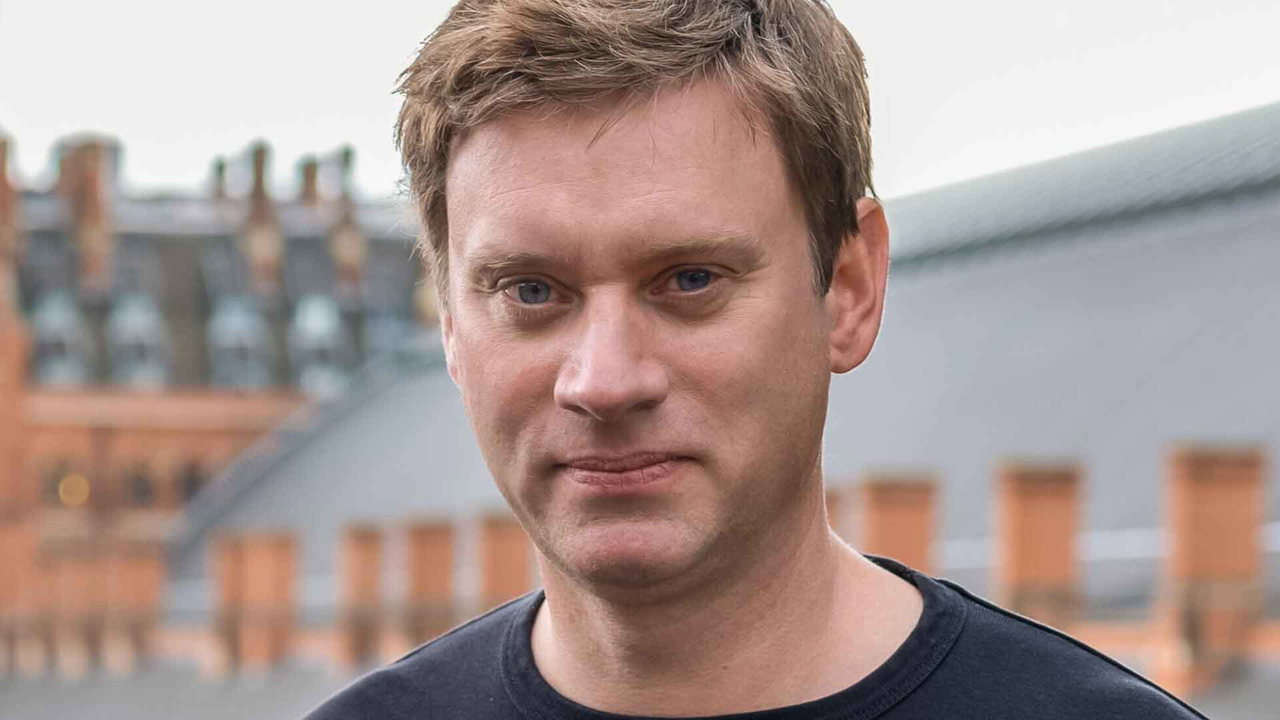
Ben Drury is the co-founder and CEO of Yoto, a company he started in 2015 alongside Filip Denker to provide a screen-free alternative for children’s audio consumption. With a professional background in the digital music industry, Drury was motivated by parental concerns regarding excessive screen time, sleep disruption, and the need for physical engagement in learning. Influenced by Montessori education principles, he developed a hardware device that uses physical smartcards to give children independent access to music, stories, and educational content. Since launching a successful Kickstarter campaign in 2017, Drury has overseen the technical and commercial scaling of the product, establishing partnerships with major publishers to build a dedicated audio library for young listeners.