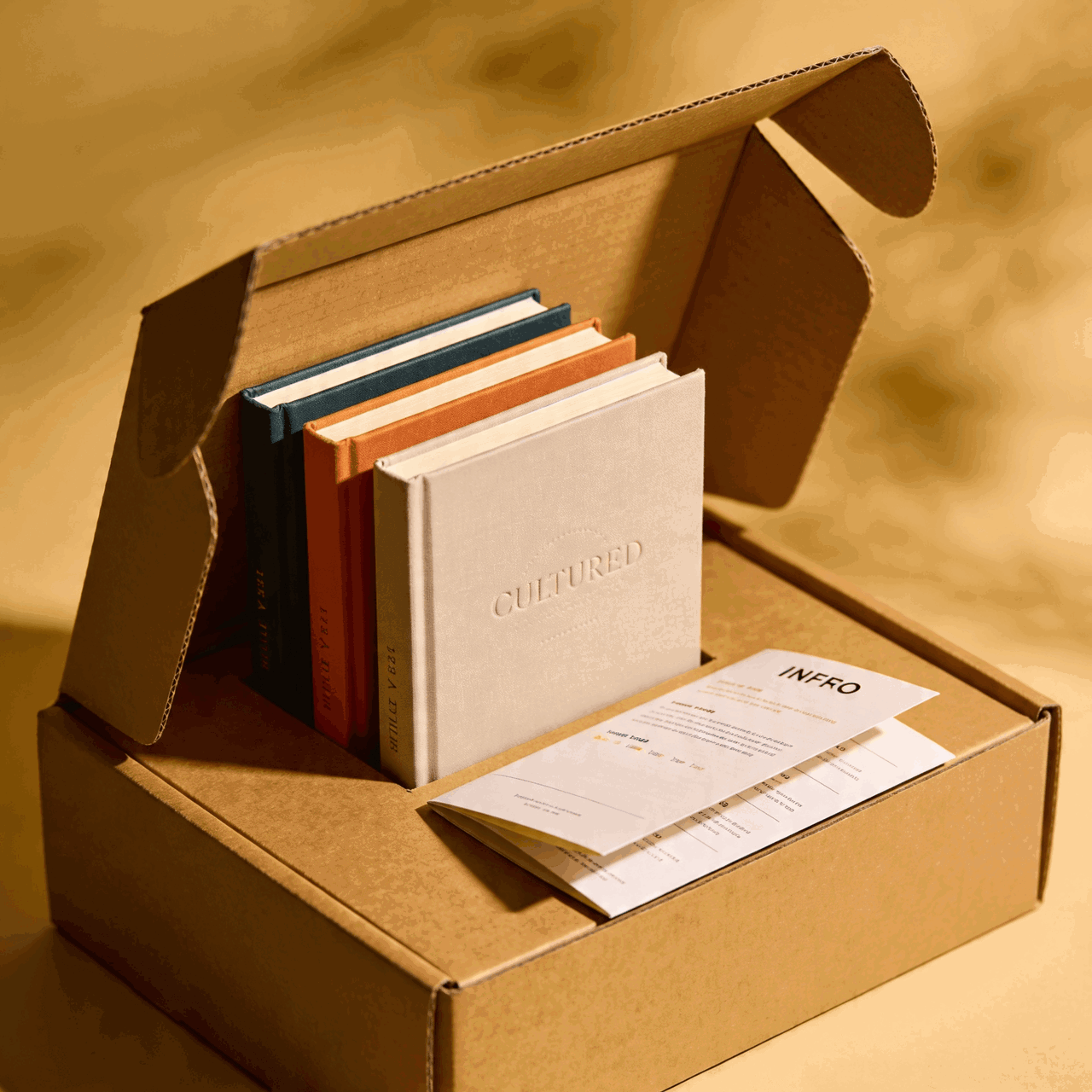
Jane Friedman explores the potential of publisher subscriptions
Cultivating reader loyalty and profitability
In this article, Jane Friedman explores how small nonprofit publishers like McSweeney’s, Open Letter, and Archipelago Books are utilizing subscription and membership models to achieve financial sustainability. Drawing from insights shared at AWP 2025, Friedman examines the shift toward direct-to-reader sales as a way to secure predictable income and bypass the complexities of traditional distribution. While the model presents logistical challenges—such as fulfillment labor and the risk of "subscriber overwhelm"—Friedman highlights how a strong curatorial identity allows these presses to build more resilient, personal connections with their audiences than the commercial market typically allows.
Published: 20.4.2026 | Foto / Video: AI generated, Freepik
At AWP 2025, I attended an insightful panel where small literary presses discussed how they stay afloat when book sales don’t always pay the bills. Subscription and membership models were mentioned as offering predictable income while deepening reader engagement, but they were also described as intensive to manage. Since then, I have never stopped being curious about whether publishers should be putting more effort into such programs, not least because indie authors have been so successful with their own subscription models and direct-to-reader sales. If indie authors can make a go of it, surely small publishers can?
Three nonprofit publishers were willing to speak with me about their programs: Amanda Uhle, publisher at McSweeney’s; Chad Post, publisher at Open Letter (affiliated with the University of Rochester); and Jillian Kravatz, director of marketing and development associate at Archipelago Books. Whether they call them membership models or subscription models, they all deliver new releases on a subscription basis, with pricing based on title count. For McSweeney’s, that’s six titles for $95. Open Letter offers six-month ($40) or 12-month ($70) subscriptions, with a new title arriving every month. Archipelago offers several plans, but the most popular is their Islet membership, which delivers a copy of each new title for $18 per month or $180 per year (set to change soon, more on that below).
The financial case for direct-to-reader models
All three publishers said subscriptions factor into print-run planning and contribute to either profitability or sustainability. Kravatz was transparent about the numbers: Roughly 500 copies of every new title are reserved for Archipelago members, a quantity that must be accounted for alongside distributor orders and other sales channels. Such sales are typically more profitable because no cut must be paid to the distributor and/or retailer, plus there’s no possibility of returns. Post said that even after absorbing shipping costs, sales directly to subscribers were more profitable than other types of sales. He has subscribers that have been with Open Letter from the very start, almost 20 years now. He knows their names, even though he hasn’t met many of them; some of them are also donors.
Kravatz was direct about how donations are unreliable in a way that subscriptions are not: “We have so many people who donate steadily and generously to us, but it’s also a bit unsteady sometimes with what people give to where, year by year. And we find that the subscription model really helps give us sustaining support that doesn’t change year to year, month to month. If anything, it grows a little bit every year. In terms of sustaining the press with fees that we can kind of rely on, it’s invaluable to us.”
While Uhle didn’t discuss fundraising in depth, she did mention that McSweeney’s has a community of donors and supporters and that she makes a point of ensuring those people know about the subscription options: “I always want to make sure that those folks know what we’re publishing and that these options exist.”
To keep subscription numbers steady or growing, marketing and promotion is necessary. All publishers expressed that there’s much more they could be doing to drive subscriptions if they carved out more time to promote them. Archipelago has seen a bit of growth over the past few years and sees a reliable uptick in subscriptions during the holiday season, when they promote memberships as gifts. “We’re trying to make an effort to really scale up the membership in the coming year or two,” Kravatz said. One of their aspirations is to reach 2,000 members. They also have plans to simplify the offerings and modify pricing.
Open Letter received excellent publicity in the New York Times around the launch of the press, which drove subscriptions from readers who wanted to support the press’s mission. But their subscriber numbers have declined from their early peak of around 250 to 300; as staffing has decreased, promotion has fallen by the wayside. However, Post added, “We still got three new subscribers this week. So, it happens, and it’s there, but there’s a lot more that we could be doing.” Whenever he runs a newsletter promotion—e.g., offering two free books with a subscription—he can bring in as many as 30 subscribers. He also said if Open Letter could put in place an auto-renewal system (it’s now a manual process of reaching out as well as physical renewal notices), that would also increase subscriptions.
Beyond the object: curation and community
Direct-to-reader subscriptions create the opportunity to offer a curatorial voice and a personal touch. Post said, “If you’re treating [subscriptions] like, ‘You purchased something, here’s an object,’ that feels a little empty to me.” He said a publisher of Open Letter’s size can do better than just shipping something as Amazon would; he always includes a personal letter with each book. “Especially a nonprofit should be having something that’s more robust, that’s more contextual-making, that gives you entryways into the book and shows that you care about it. Rather than ‘Well, this is what we thought we could sell. Here’s your book.’”
Uhle said that McSweeney’s—which has a long history with subscriptions going back to 1998 with the quarterly magazine—is fortunate to have a readership that has grown to trust them. She called the McSweeney’s list challenging to define even for herself, noting that while it’s “a very mixed list,” there is “something in common—there’s a thread” running through it editorially and emotionally. She continued, “There’s an audience, a smaller audience, but a fervent one that wants to get our books when they come out. They don’t want to miss a book.”
Post said that 10 to 20 subscribers will email him or comment online about the books when they receive them and read them. “I find it very gratifying.” He’s now testing out online salons with the author and translator that subscribers (or people ordering directly from Open Letter) can sign up to attend, limited to about 20 participants. “They can have this more rich experience, and it’s cool for the readers but also the author. We did it this one time, and [the author] was blown away. It was the best thing, the best publicity we could have done for that author. She said, ‘People actually read this. Like they had real questions, they asked about specific passages. These people actually knew my book.’ … The more that we can make that possible, the better.”
The operational reality: fulfillment and friction
Fulfillment is one headache that publishers need to be aware of. Uhle noted that for a publisher unaccustomed to direct fulfillment, managing subscriber tracking and shipment logistics can present a learning curve and involve considerable administrative work. For McSweeney’s, adding book fulfillment wasn’t a problem because they already manage subscriptions for three magazines and have a mailing house. Archipelago spent much of last year doing member fulfillment entirely in-house, which Kravatz described as “two long days of packing” per book release, workable at current scale but a bottleneck to growth. Recently Archipelago started working with an outside mailing house that is giving them a nonprofit rate that Kravatz said was amazing for them. But they still do a lot of work on backend housekeeping to manage subscriptions—who’s current, who’s lapsed, updating addresses, etc.
Publishers with distributors should watch for potential friction. Open Letter is distributed by Consortium (owned by Ingram), and Post said that Consortium has expressed some informal resistance to publishers building robust direct sales channels in a way that makes it sound like concern for independent bookstore sales. But he has pushed back on such arguments. “You show me which bookstores have our books that we’re taking away sales from, then we’ll talk about it. Then that conversation ends,” he said. He said later, “I’ve written about this forever: There are no good feedback loops in publishing. Everything’s so separated and mediated that it’s hard to know who your customers are or discuss things with them.” For him, subscriptions help resolve part of that gap.
Strategic challenges and the "nightstand problem"
Finally, Kravatz pointed to the potential for the “nightstand problem”—subscriber overwhelm when publishers release a significant number of titles per year. Subscribers may cancel not because they’re dissatisfied but because they’re overwhelmed with books. One solution might be an option that none of the three addressed: the possibility of a subscription pause or deferral, rather than a full cancellation, to retain readers who are temporarily overwhelmed. Or maybe a “lighter” subscription plan as a backup offer.
Bottom line: Subscriptions may require an existing and established brand identity, judging by the publishers I spoke with. McSweeney’s has been building its reputation since 1998. Open Letter occupies a specific niche in literary translation and runs the Three Percent website as a companion resource. Archipelago is a well-established translator of world literature and has a devoted nonprofit community. Chad Post came closest to naming this requirement when he warned that a subscription without curatorial voice and identity won’t distinguish itself in a crowded market. At one point he said, “You can get too many where everyone’s doing it, and how do you separate yourself or distinguish yourself?”
Subscriptions may be an ideal tool for deepening an established relationship, while publishers who haven’t yet developed a clear editorial identity may find the model harder to sustain. Kravatz said that the subscription model operates like a natural extension of community support that they already need to survive as a nonprofit press. She compared that to a more commercial press (or, I would say, even an indie author), adding, “If you’re a more commercial publisher, perhaps it’s a model that you’re embarking on to kind of build up that community. But I think for a long time we felt like we have the community already, and we want to just further build on it and thank those members.”

Jane Friedman has spent her entire career working in the publishing industry, with a focus on business reporting and author education. Established in 2015, her newsletter The Bottom Line provides nuanced market intelligence to thousands of authors and industry professionals; in 2023, she was named Publishing Commentator of the Year by Digital Book World. Jane’s expertise regularly features in major media outlets such as The New York Times, The Atlantic, The Today Show, Wired, Fox News, and BBC.