Major publishers launch class action against Google over Gemini AI training
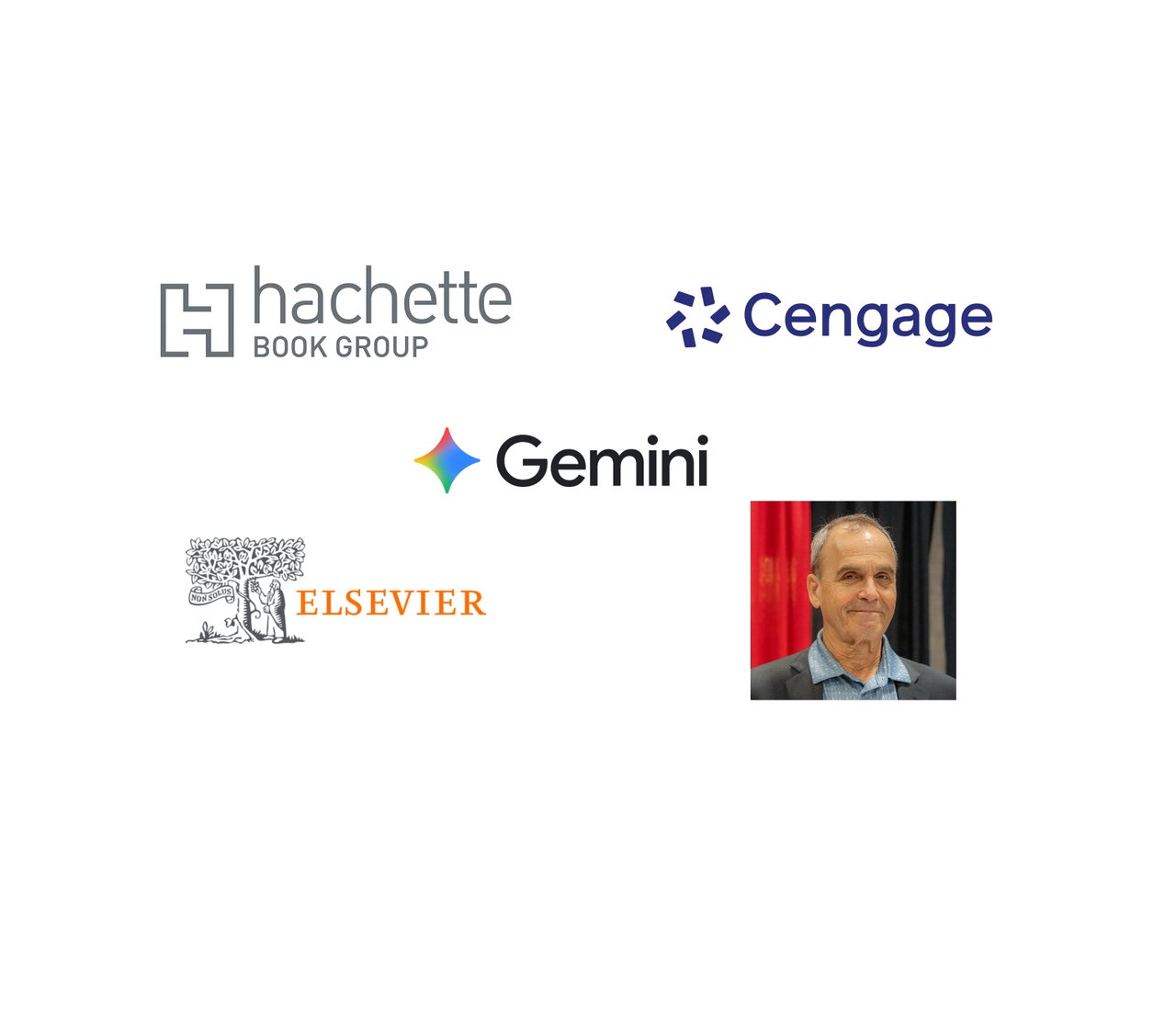
Hachette, Cengage, Elsevier and Scott Turow accuse Google of unauthorised use of copyright-protected works
Three leading publishers and bestselling author Scott Turow file putative class action alleging Google willfully infringed millions of copyrighted works to develop its Gemini large language models, citing internal documents showing the company knew its actions were illegal.
Published: 14.7.2026 | Foto / Video: dpr, Scott Turow:
Rosiestep, CC BY-SA 4.0, via Wikimedia Commons
On 10 July 2026, Hachette Book Group, Cengage Learning, Elsevier, and author Scott Turow filed a comprehensive class action lawsuit in the U.S. District Court for the Southern District of New York against Google LLC. The complaint alleges systematic copyright infringement in the development of Google's Gemini AI models, representing what plaintiffs describe as "one of the most prolific infringements of copyrighted materials in history."
The timing reflects growing urgency within the publishing sector. While the named plaintiffs initially sought to intervene in existing litigation filed in 2023, statute of limitations concerns prompted independent action. The complaint spans fiction, children's books, educational textbooks, and scholarly articles—underscoring the breadth of alleged infringement.
Alleged pattern of unauthorized copying
The complaint outlines three distinct phases of alleged infringement.
First, Google allegedly copied works obtained through Google Books, Google Play Books, and Google Scholar—programs where publishers provided content under specific, restricted licenses. The lawsuit states that publishers "never authorized Google to copy the works they received for Google Books for the completely separate purpose of training its AI models."
Second, Google allegedly obtained copyrighted material through web scraping, including from piracy sites like Z-Library and content behind paywalls.
Third, the lawsuit alleges Google made additional unauthorized copies during the actual training process.
Google's internal documents reportedly reveal awareness of legal risks. One communication flagged that using publisher-provided copyrighted books for AI purposes was "highly problematic," with potential fines of "$10Bs-$100Bs."
Pending and recent litigation by publishers against AI companies
Overview and status as of July 2026 — book, academic, education and press publishers

Market impact and financial stakes
The plaintiffs argue that Gemini models generate outputs that directly substitute for original works through verbatim reproductions, detailed summaries, and unauthorized derivative works. The complaint presents examples where Gemini allegedly reproduced substantial portions of copyrighted textbooks and novels.
Google has profited substantially from AI initiatives. In October 2025, Alphabet reported its first $100 billion revenue quarter, attributed largely to AI-driven growth. The Gemini app reached over 650 million monthly active users.
Meanwhile, plaintiffs argue they have been denied both direct revenue and participation in the emerging licensing market for AI training materials. The complaint notes that a "well-developed and rapidly expanding market exists for licensing copyrighted works for AI training," with numerous AI companies entering negotiated agreements with publishers.
Industry implications
This lawsuit represents a coordinated response from major publishing segments—trade, educational, and scholarly publishers—alongside individual authors. The case highlights tension between technology companies' fair use arguments and publishers' contention that systematic copying for commercial AI development exceeds fair use boundaries.
The complaint explicitly rejects characterization as opposition to AI technology, stating: "These facts are not a referendum on AI technologies, but rather their greedy and irresponsible deployment."
The lawsuit's outcome could significantly influence how AI companies source training data. If plaintiffs prevail, technology companies may need to negotiate licensing agreements, potentially creating substantial revenue streams for publishers while increasing costs for AI developers.
As the case proceeds, discovery could provide unprecedented insight into how major technology companies acquire and process copyrighted content for AI development. The plaintiffs have requested that Google provide "an accounting of the training materials, training methods, and known capabilities of its Gemini Models," which could establish important precedents for transparency in AI development practices.